


AppCheck is a DAST platform that started life as an internal tool for penetration testers at SEC-1, now part of the Claranet Group. That origin shows in the product: it combines OSINT reconnaissance with browser-based crawling and dynamic fuzzing rather than relying on signature matching alone.
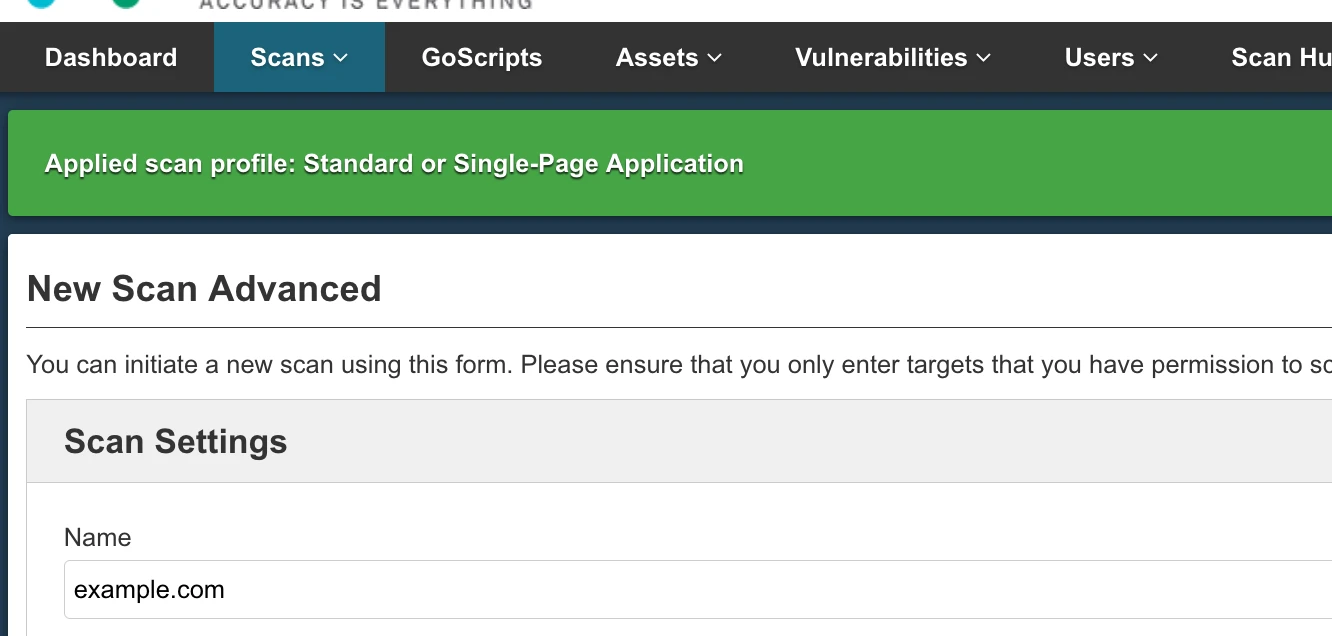
The platform scans web applications, APIs, and infrastructure using browser-based crawling and OSINT reconnaissance. ISO 27001:2022 certified, based in the UK.
What are AppCheck’s key features?
| Feature | Details |
|---|---|
| Vulnerability coverage | 100,000+ known security flaws |
| Crawling engine | Real browser rendering (handles SPAs, AJAX, WebSockets) |
| OSINT recon | Subdomain enumeration, tech fingerprinting, cert transparency logs |
| API testing | OpenAPI/Swagger, GraphQL, SOAP |
| Custom workflows | GoScript Flows scripting language |
| Vuln database | VulnFeed with hourly updates |
| Detection methods | Dynamic fuzzing, out-of-band, IDOR detection |
| Licensing | Unlimited scans and users per license |
| Certifications | ISO 27001:2022 |
I run authenticated dynamic scans against logged-in user sessions using GoScript Flows for the multi-step login. The platform does API security testing (black-box) against REST, GraphQL, and SOAP endpoints by ingesting OpenAPI/Swagger specs. SQL injection / XSS probing uses payload mutation across discovered parameters, and out-of-band detection catches blind variants that fail to surface in the HTTP response.
| Capability | Details |
|---|---|
| Browser-Based Crawling | Uses a real browser engine to render pages, execute JavaScript, and interact with SPAs built on React, Angular, or Vue. Finds endpoints that traditional HTTP-parsing crawlers miss entirely. |
| OSINT Reconnaissance | Before active scanning starts, AppCheck gathers intelligence on the target: subdomain enumeration, technology stack fingerprinting, certificate transparency log analysis, and DNS record inspection. This widens the attack surface before a single probe is sent. |
| GoScript Flows | A custom scripting language for modeling multi-step user journeys. Script login sequences, form submissions, and business logic workflows. The scanner follows these scripts during testing to reach areas behind authentication or complex navigation. |
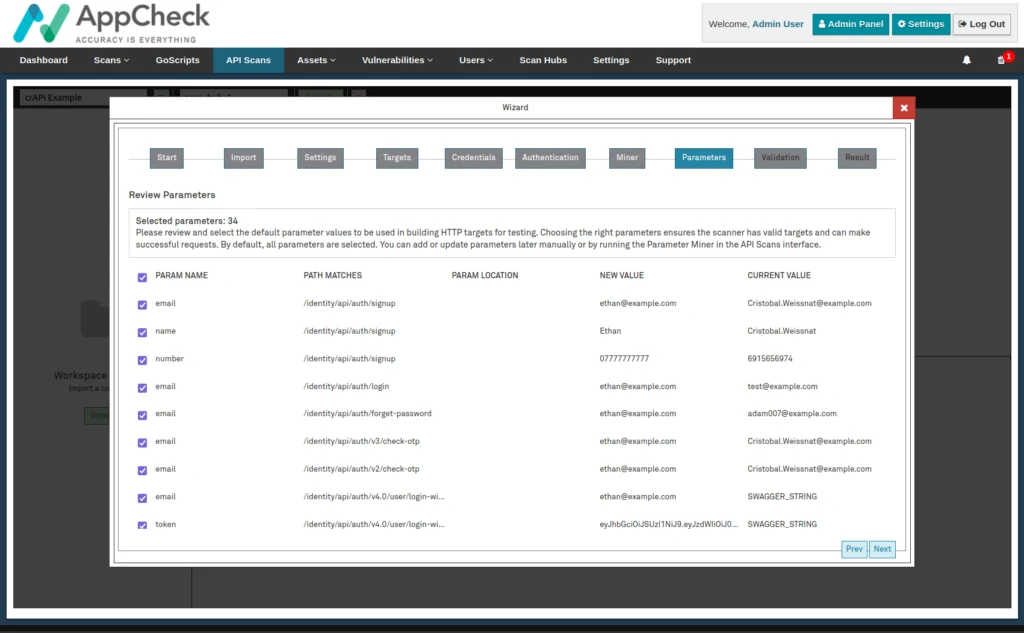
VulnFeed Database
AppCheck maintains its own vulnerability database, VulnFeed, updated hourly with newly published vulnerabilities. This means the scanner picks up new attack vectors faster than tools that rely on monthly or quarterly signature updates.
Out-of-Band and IDOR Detection
AppCheck goes beyond standard request-response testing. The OWASP Testing Guide identifies out-of-band techniques as essential for detecting blind injection flaws.
AppCheck’s out-of-band detection catches vulnerabilities where the exploit triggers a callback to an external server rather than returning data in the HTTP response.
The scanner also automates IDOR (Insecure Direct Object Reference) detection, a class of access control flaws that most DAST tools skip.
What does AppCheck integrate with?
 Azure DevOps
 Jenkins
 TeamCity
AppCheck also has an open API for custom build pipeline integrations. For broader context, see the DAST tools landscape and the manual-testing standard Burp Suite .
Compliance Reporting
Reports map findings to specific compliance frameworks:
- PCI DSS requirements
- OWASP Top 10 coverage
- CWE classification
- Custom report templates
- Executive summaries and technical breakdowns
How do I get started with AppCheck?
- Sign up — Create an account on the SaaS platform at appcheck-ng.com, or deploy the on-premises version in your own environment.
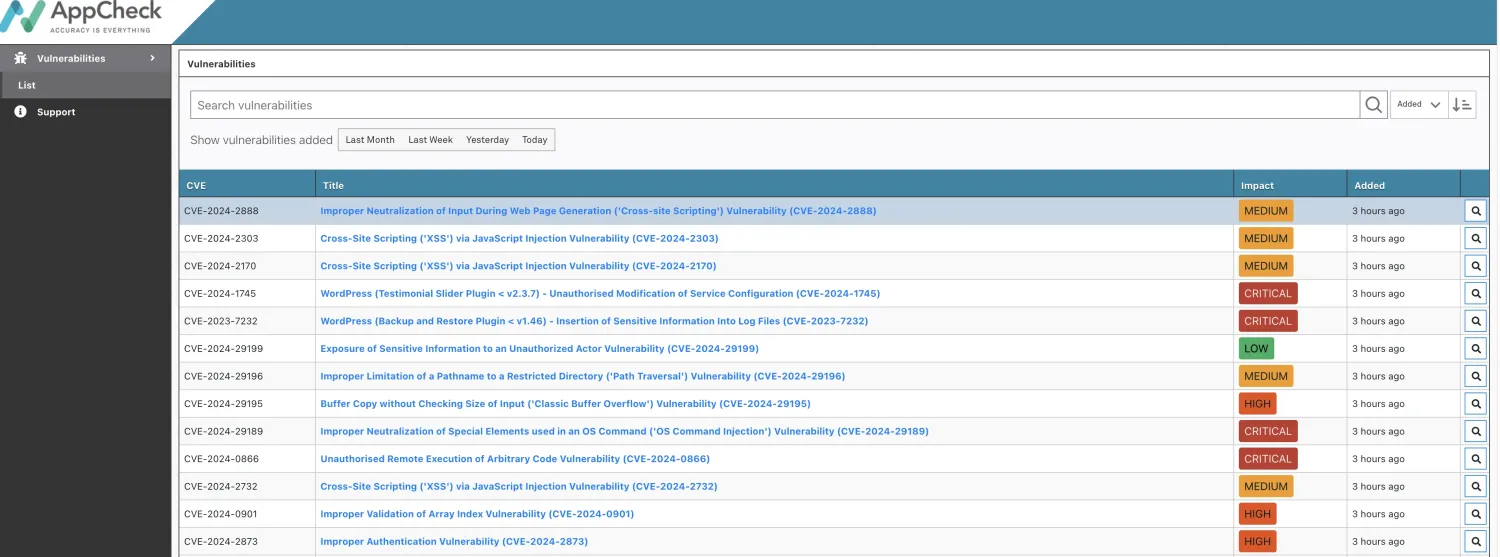
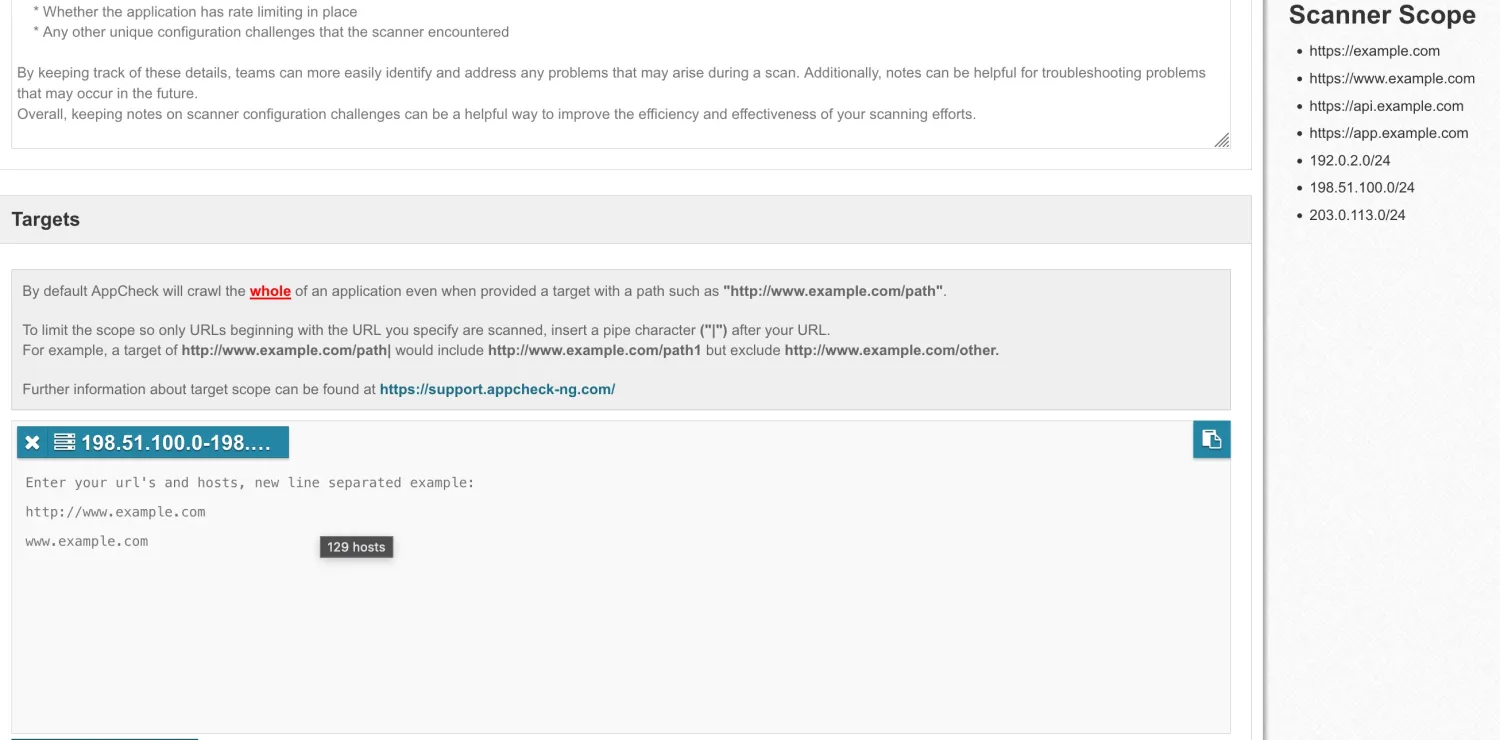
- Add targets — Enter your web application domains, API endpoints, or internal infrastructure ranges. AppCheck handles both external and internal scanning.
- Configure authentication — Set up login credentials or use GoScript Flows to script complex authentication sequences the scanner should follow.
- Launch scan — Choose a scan profile and start. The OSINT phase runs first, followed by browser-based crawling and active vulnerability testing.
- Review and export — Findings include severity ratings, proof-of-exploitation where available, and remediation guidance. Export as compliance reports or push to your issue tracker.
How to use AppCheck
After onboarding, my typical workflow is: add a target domain or API endpoint, attach an authentication profile or GoScript Flow, pick a scan profile (Web App, API, or Infrastructure), and launch. The OSINT phase runs first to enumerate subdomains and fingerprint the stack, then browser-based crawling kicks in.
I trigger scans from the dashboard for ad-hoc work and from the open API for CI/CD pipelines. A typical pipeline call posts to the scan endpoint with a target ID and profile, polls for completion, and pulls findings as JSON or compliance-mapped reports.
Triage happens in the dashboard. Each finding ships with severity, proof-of-exploitation when applicable, and remediation guidance. Selected issues push to Jira or the issue tracker via the integration layer. GoScript Flows is the differentiator when authentication or business-logic workflows need scripted multi-step macros.
What are AppCheck’s limitations?
AppCheck is less well-known than Burp Suite or Acunetix , which means fewer community resources and third-party guides.
The GoScript Flows scripting language has a learning curve if you need to model complex business logic. No free tier exists.
AppCheck is a DAST tool focused on web applications, APIs, and infrastructure. Pair it with SAST for source code analysis and manual testing for logic flaws that automated scanners cannot catch.
To understand how DAST complements other testing approaches, read the SAST vs DAST vs IAST comparison .
Teams needing CI/CD-native scanning should also evaluate StackHawk or Bright Security .
What are alternatives to AppCheck?
If AppCheck does not fit, four alternatives cover most exit paths.
Invicti is the enterprise pick — proof-based scanning, multi-team RBAC, and ASPM via the Kondukto acquisition. Pick it when you need to manage thousands of apps across multiple business units.
Burp Suite Professional is the manual-testing toolkit. Pick it when a hands-on pentester drives the work and BApp Store extensibility matters more than guided automation.
Acunetix is the SMB sibling of Invicti — same proof-based engine at a smaller-org scale. Pick it when you want guided scans without the enterprise overhead.
Detectify leans on a 400+ ethical-hacker crowdsource program plus EASM. Pick it when external attack surface coverage matters as much as deep app scanning.