
Salt Security Alternatives
Top Salt Security Alternatives

Integrated WAF + API Protection

Platform-Agnostic API Protection at Scale

Unified API Protection with Native Blocking

OpenAPI Spec Audit & Conformance
- Salt Security deploys out-of-band with zero latency but cannot block attacks inline; Wallarm and Cequence provide native inline blocking in the request path.
- Akamai API Security (built on Noname) runs 150+ dynamic tests in CI/CD and is vendor-neutral across any CDN, WAF, or gateway.
- Cequence processes over 10 billion API interactions daily and was named a Leader in the 2025 KuppingerCole API Security Leadership Compass.
- APIsec generates AI-driven attack scenarios from API specs with 1,200+ security playbooks, starting at $650/month with a free tier for public APIs.
- According to Salt Security, the platform ships nearly 100 pre-loaded compliance posture rules for PCI DSS, HIPAA, GDPR, SOC 2, NIST, CMMC, and FedRAMP.
The best Salt Security alternatives in 2026 are Wallarm , Akamai API Security , Cequence Security , 42Crunch , and APIsec . Each takes a different angle — inline WAF blocking, platform-agnostic discovery, native API attack blocking, spec-driven shift-left security, or AI-generated attack testing.
If you specifically need to compare Salt Security against 42Crunch, the head-to-head breakdown lives on a dedicated page: Salt Security vs 42Crunch . This page focuses on the broader alternatives landscape.
Why Look for Salt Security Alternatives?#
Salt Security is one of the most recognized names in API security tools .
Its Illuminate platform combines API discovery, behavioral threat detection, and posture governance in a single product, and the company was among the first to focus exclusively on the API security problem.
But being a pioneer does not make it the right fit for every team.
The most common reason organizations explore alternatives is pricing. Salt Security is an enterprise-grade platform with pricing based on API traffic volume.
For mid-market teams or organizations with smaller API estates, the cost can be difficult to justify when simpler or more targeted tools would cover their needs.
Other teams want a different approach to API security entirely. Salt focuses on runtime protection — analyzing live API traffic to detect threats after deployment.
Teams that prioritize shift-left security want to catch API vulnerabilities during design and development, before code reaches production. Tools built around OpenAPI specification auditing and CI/CD testing serve that workflow better than traffic-based analysis.
Some organizations also need inline blocking. Salt deploys out-of-band through traffic mirroring, which means it detects threats but relies on integrations with gateways or WAFs to actually stop attacks.
Teams that want a single product to both detect and block prefer platforms with native inline enforcement.
Finally, teams already running a WAF may want a combined WAF and API security solution rather than paying for two separate products. And those adopting open-source or freemium tools want to minimize vendor lock-in and licensing overhead.
Top Salt Security Alternatives#
1. Wallarm#
Wallarm combines a web application firewall with API-specific protection under one roof. According to Wallarm, it protects over 160,000 APIs and processes billions of requests daily.
API discovery builds your inventory from live traffic automatically, and ML-based threat detection covers the full OWASP API Top 10 .
The critical difference from Salt is inline blocking. Wallarm sits in the request path and stops attacks before they reach your backend.
Salt operates out-of-band and relies on third-party enforcement. Wallarm also includes bot management, GraphQL security, and DDoS protection — capabilities that would require additional tools alongside Salt.
Security Edge deployment via DNS redirect gets you up and running in as little as 15 minutes without infrastructure changes.
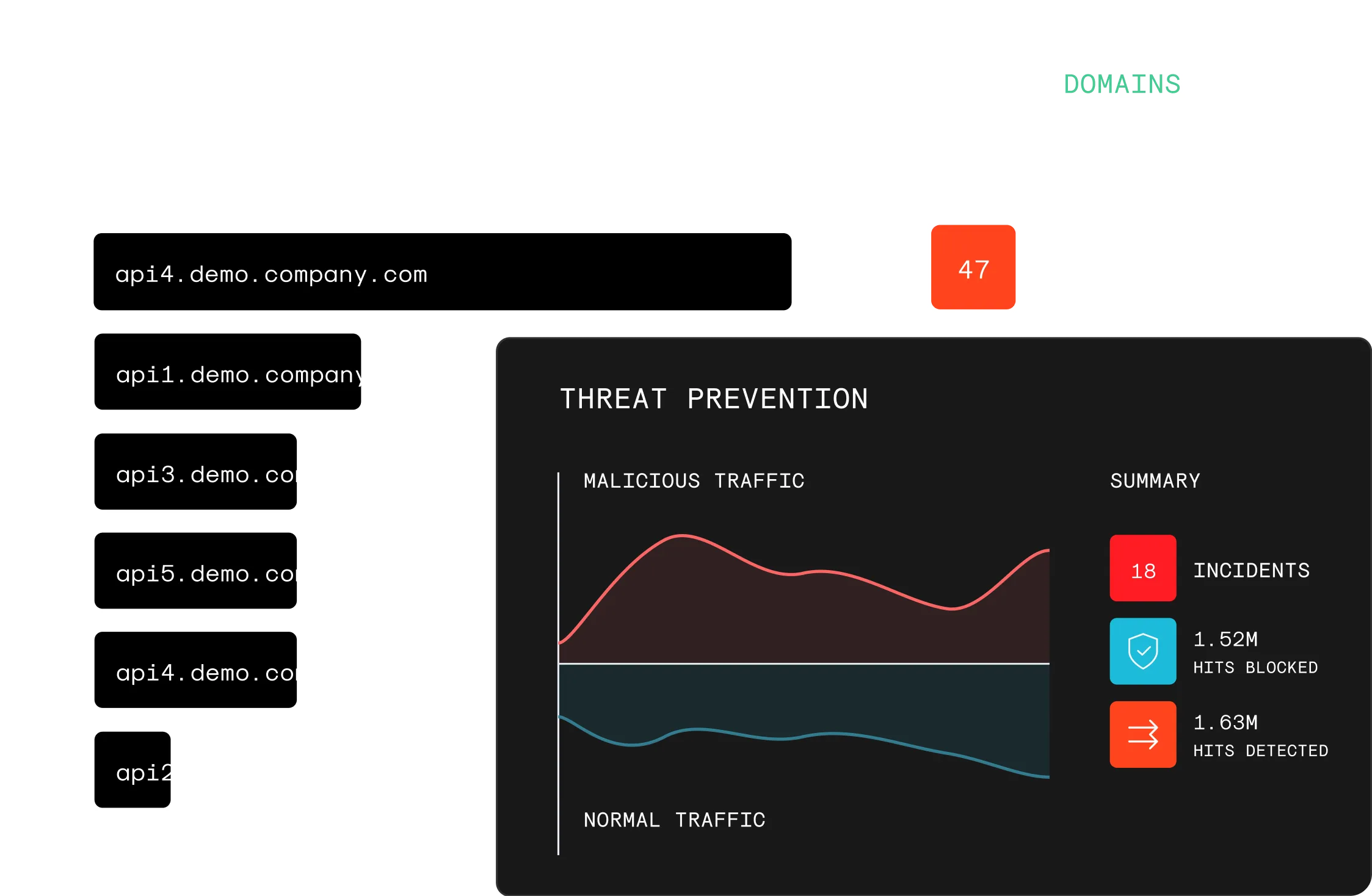
Best for: Teams that need combined WAF and API protection with native inline blocking, especially those facing bot abuse and credential stuffing. License: Commercial (Security Edge has a free tier) Key difference: Inline blocking and WAF capabilities built in. Salt detects; Wallarm detects and blocks.
2. Akamai API Security#
Akamai API Security (built on Noname Security, acquired June 2024) is the closest direct competitor to Salt Security in the runtime API protection space.
It discovers APIs enterprise-wide, runs 150+ dynamic tests in CI/CD pipelines, and detects runtime attacks using ML. Named a Leader across four categories in the 2025 KuppingerCole API Security Leadership Compass.
The platform is vendor-neutral — it works without any Akamai CDN products and deploys across SaaS, hybrid, and on-premises environments.
It monitors both east-west (internal) and north-south (external) API traffic, which Salt also covers.
Akamai adds CI/CD testing that Salt lacks, and its compliance dashboards cover PCI DSS v4.0, GDPR, ISO 27001, HIPAA, and FAPI.
Best for: Enterprises with complex multi-vendor infrastructure who need platform-agnostic API discovery, testing, and runtime protection. License: Commercial Key difference: Adds CI/CD security testing (150+ dynamic tests) on top of runtime protection. Platform-agnostic across any CDN, WAF, or gateway.
3. Cequence Security#
Cequence stands out from Salt Security in one fundamental way: it blocks attacks natively . Most API security tools, including Salt, detect threats and forward alerts to a separate WAF or gateway for enforcement.
Cequence deploys inline as a reverse proxy and stops malicious requests in real time.
According to Cequence, the platform processes over 10 billion API interactions daily for Fortune 500 customers. Behavioral fingerprinting tracks how clients interact with APIs over time, catching attackers who rotate IPs and mimic legitimate traffic.
Bot management covers credential stuffing, account takeover, inventory hoarding, and content scraping without requiring client-side JavaScript.
Cequence was named a Leader in the 2025 KuppingerCole API Security Leadership Compass and ranked #128 on the Deloitte Technology Fast 500.
Best for: Enterprise teams that need native inline blocking plus bot defense in one platform, particularly in retail, financial services, and telecom. License: Commercial Key difference: Native blocking without depending on a separate WAF. Behavioral fingerprinting catches sophisticated attackers that IP-based detection misses.
4. 42Crunch#
42Crunch focuses on OpenAPI contract validation and API posture management, making it Salt’s closest direct competitor on shift-left API security. See the full head-to-head analysis: Salt Security vs 42Crunch .
Best for: Teams that maintain OpenAPI specifications. License: Commercial (with free tier) Full review: 42Crunch
5. APIsec#
APIsec fills a gap that Salt Security does not cover at all: pre-production API penetration testing. While Salt focuses on runtime traffic analysis, APIsec generates AI-driven attack scenarios from your API specifications and executes them against live endpoints to find vulnerabilities before attackers do.
The platform supports REST, GraphQL, SOAP, and RAML APIs with over 1,200 security playbooks.
It tests for business logic flaws like BOLA, broken access controls, and workflow bypass — the same attack types Salt detects at runtime, but caught earlier in the development cycle.
Pricing starts at $650/month with a free tier for public API testing.
According to APIsec, the platform is trusted by 5,000+ organizations and integrates with 10 CI/CD platforms and major issue trackers.
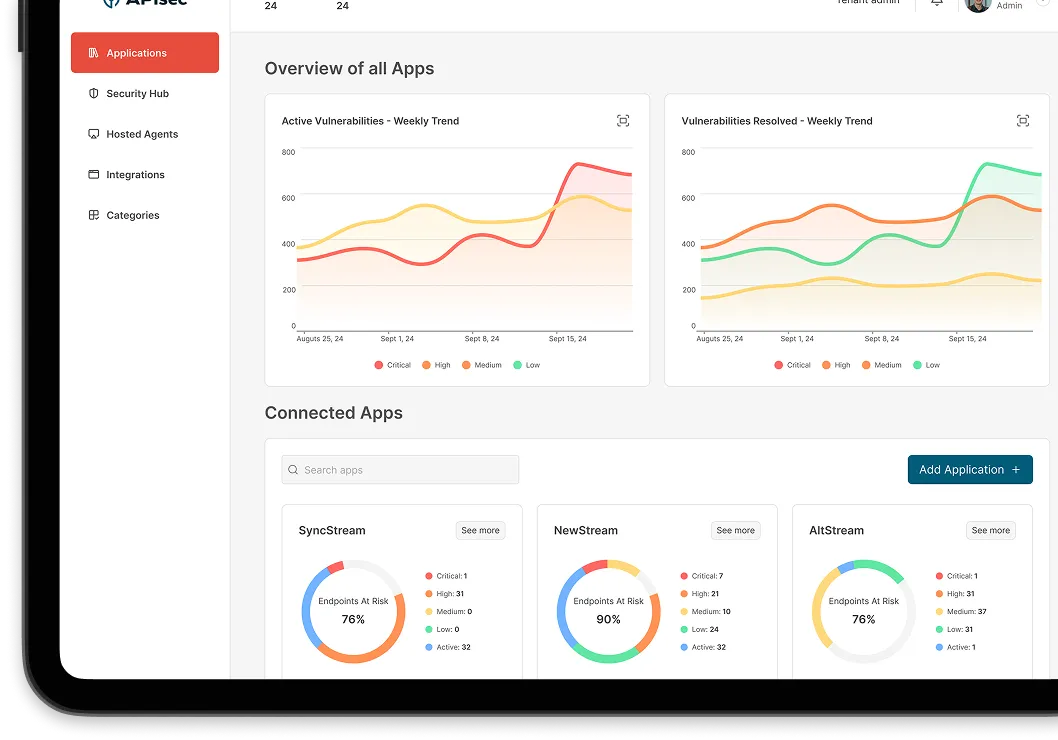
Best for: Teams that want continuous automated API penetration testing integrated into CI/CD, without runtime infrastructure changes. License: Freemium (free tier for public APIs) Key difference: Testing-focused rather than runtime-focused. Finds API vulnerabilities before deployment instead of detecting attacks after.
6. DAST Tools with API Scanning: Escape and StackHawk#
Teams that primarily need API vulnerability scanning rather than full runtime protection should consider API-native DAST tools. Two stand out:
Escape is an API-native DAST platform with 330+ security tests and a focus on business logic flaws like BOLA and IDOR. It runs against REST and GraphQL APIs using AI-powered payload generation.
No traffic mirroring or proxy setup required — point it at your API and it scans. Y Combinator backed and SOC 2 Type II compliant.
StackHawk wraps the proven OWASP ZAP engine in a developer-friendly package built for CI/CD pipelines. Configuration lives in a YAML file in your repository.
It tests REST, GraphQL, SOAP, and gRPC APIs. A 14-day free trial is available for evaluation.
Neither tool provides runtime protection or API discovery from production traffic. They complement Salt Security rather than replace it, covering the shift-left testing gap that Salt does not address.
See more comparisons in the AppSec Santa API security hub.
Escape review | StackHawk review
Feature Comparison#
The matrix below summarizes how each Salt alternative differs across discovery, runtime detection, blocking model, CI/CD support, and deployment shape. Read it left-to-right for the per-feature trade-off across vendors, then scan top-to-bottom to see which capabilities cluster around buyer profiles — runtime-first, contract-first, or WAAP-bundled.
The three rows that decide most evaluations are runtime protection, inline blocking, and OWASP API Top 10 coverage.
Salt and Akamai detect broken object-level authorization (BOLA — OWASP API1:2023) via behavioral analytics on per-user access patterns; 42Crunch detects BOLA via OpenAPI contract conformance instead, which is a structurally different model. Wallarm and Cequence add inline blocking on top of detection, which Salt’s out-of-band architecture deliberately avoids.
| Feature | Salt Security | Wallarm | Akamai API Security | Cequence | 42Crunch | APIsec |
|---|---|---|---|---|---|---|
| License | Commercial | Commercial | Commercial | Commercial | Free tier + Commercial | Freemium |
| API discovery | Traffic + cloud + surface scan | Traffic-based | Traffic + cloud | Traffic + external | Spec-based | Spec-based |
| Runtime protection | Yes (out-of-band) | Yes (inline) | Yes (out-of-band) | Yes (inline) | Micro API firewall | No |
| Inline blocking | No | Yes | No | Yes | Yes | No |
| CI/CD testing | No | No | Yes (150+ tests) | Yes | Yes | Yes (1,200+ playbooks) |
| OpenAPI audit | No | No | No | No | 300+ checks | No |
| Bot management | No | Yes | No | Yes | No | No |
| WAF included | No | Yes | No | Yes (WAAP) | No | No |
| OWASP API Top 10 | Detection | Detection + blocking | Detection + testing | Detection + blocking | Audit + scan | Testing |
| Compliance dashboards | PCI DSS, HIPAA, GDPR, SOC 2 | No | PCI DSS v4.0, GDPR, ISO 27001, HIPAA | PCI DSS, GDPR, DORA | No | PCI DSS, HIPAA, SOC 2, GDPR |
| MCP/AI agent security | Yes | Yes | Yes | Yes (AI Gateway) | No | No |
| Deployment | SaaS, on-prem | Docker, K8s, DNS edge, cloud | SaaS, hybrid, on-prem | SaaS, on-prem, hybrid | SaaS, IDE, CI/CD | SaaS |
| Self-hosted option | Yes | Yes | Yes | Yes | Enterprise | Hosted agents |
When to Stay with Salt Security#
Salt Security remains the right choice in several scenarios:
- API discovery is your primary concern. Salt combines three discovery methods — cloud connectors, external surface scanning, and live traffic analysis — in one platform. According to Salt Security research, 30.7% of APIs go undiscovered by CDN-based tools alone. If finding shadow and zombie APIs is the top priority, Salt’s multi-source approach is hard to beat.
- You need deep compliance posture governance. According to Salt Security, the platform ships nearly 100 pre-loaded posture rules covering PCI DSS, HIPAA, GDPR, SOC 2, NIST, CMMC, and FedRAMP. Custom rules can be created without coding. Few competitors match this breadth of compliance coverage for API-specific governance.
- Agentic AI and MCP security matter to your organization. Salt was early to address MCP server security with dedicated features for discovering, monitoring, and governing AI agent interactions. If your organization is deploying agentic AI workloads, Salt’s MCP Protect and Agentic AI Governance features are more mature than most competitors.
- You prefer agentless, out-of-band deployment. Salt deploys without inline components, adding zero latency to API requests. For teams that cannot tolerate any additional request-path latency, this architecture is a requirement, not a preference.
- Behavioral threat detection for logic-based attacks is critical. Salt’s ML-based behavioral analysis catches BOLA, credential stuffing, and data exfiltration by baselining normal API behavior over weeks. This approach finds attacks that signature-based and spec-based tools miss entirely.
If you do decide Salt is still the right fit after evaluating the alternatives, the next step is the Salt Security review for the full product breakdown.
Salt Security alternatives pricing comparison#
Most Salt alternatives sit in the same contact-sales tier, so the actual pricing differences live in deployment topology, included modules, and existing-vendor leverage rather than in published rate cards.
**Contact-sales vendors. ** Salt Security , Akamai API Security , Imperva API Security , and Cequence all run procurement-based pricing through enterprise sales. Quotes scale with API call volume, the number of monitored entry points, and which adjacent modules are in scope (WAF for Imperva, edge for Akamai, bot defense for Cequence).
Existing vendor relationships matter — adding the API security module to an existing Imperva or Akamai contract is consistently cheaper than greenfield procurement.
**Public-tier and freemium vendors. ** Wallarm publishes Security Edge as a free tier on the public site, with the full Advanced API Security and Cloud-Native WAAP products sold through enterprise sales.
42Crunch offers a free tier for the OpenAPI audit alongside enterprise pricing for the runtime micro API firewall, and APIsec lists Standard ($650/month) and Pro ($2,600/month) tiers publicly with a free plan for public APIs up to 100 endpoints.
Open-source baselines. No direct open-source replacement exists for Salt’s behavioral runtime model. Wallarm’s NGINX module heritage and the open-source projects it maintains (API Firewall, GoTestWAF, libDetection) are the closest open-source-friendly substrate, but the commercial product layers cloud analytics and ML on top that the OSS components do not provide.
**Pricing axes. ** The four most common axes are API call volume (Salt, Akamai, Imperva, Cequence), per-environment or per-cluster pricing (Wallarm), per-endpoint tiers (APIsec), and bundled WAAP cost (Imperva, Wallarm, Cequence).
Procurement cycles for the contact-sales vendors run 30–60 days for new buyers; the public-tier vendors compress that to days for self-serve onboarding.
Which Salt Security alternative fits you best?#
The choice usually comes down to which existing-stack signal or buyer profile dominates. Five common scenarios cover most evaluations.
- Existing Akamai or Noname customer. Akamai API Security is the canonical Salt-replacement path post-acquisition. The June 2024 deal folded Noname Security into Akamai’s edge, and the rebranded product runs the same engine across multi-CDN environments. Pick Akamai when an existing edge relationship exists or when multi-CDN coverage is the deciding factor.
- Contract-first or shift-left team. 42Crunch is structurally different from Salt’s runtime-only model. Every check ties back to the OpenAPI spec, and a runtime micro API firewall enforces the same contract in production. Pick 42Crunch when the security model has to live and die with the spec rather than with traffic baselines.
- WAAP-first or WAF-heritage stack. Imperva API Security is the right fit when the existing WAF is already Imperva or Thales; Wallarm suits product engineering teams who want one tool to handle the WAF replacement and the API security purchase in the same cycle.
- Bot-defense and business-logic abuse focus. Cequence leads with a unified API protection platform tuned for credential stuffing, inventory hoarding, scraping, and account takeover, with native inline blocking that Salt’s detection-only architecture does not provide.
- eBPF or distributed-tracing leaning team. Traceable AI , now part of Harness’s DevSecOps suite, propagates security context through the trace graph; Levo.ai covers similar east-west API discovery via eBPF instrumentation. Pick either when distributed tracing is already part of the stack.
The 30-day evaluation runbook I see work cleanly across these vendors looks the same: start with a free trial or scoped POC, target three representative APIs (one external, one partner, one internal), measure detection coverage against a known attack set, and track the false-positive rate against your baseline traffic.
The vendor with the lowest false-positive rate at acceptable detection coverage is almost always the right choice — not the vendor with the longest feature list.
Salt Security alternatives FAQ#
**Is Akamai API Security a direct Salt alternative? ** Yes — and it is the closest peer post-acquisition. Akamai bought Noname Security in June 2024 for $450 million and now sells the platform as Akamai API Security.
The same engine that competed with Salt as Noname now runs across Akamai’s edge with continued multi-CDN support, which makes it the canonical Salt-replacement path for buyers comfortable with an Akamai relationship.
**Can I replace Salt with an open-source tool? ** No full replacement exists. The behavioral runtime model that drives Salt’s BOLA and credential-stuffing detection has no direct open-source equivalent.
Partial coverage is possible by combining open-source WAAPs (Wallarm’s NGINX module heritage, the open-source projects Wallarm maintains) with custom analytics on traffic logs, but the operational overhead and tuning cost usually exceed the license savings.
**What’s the migration cost? ** The technical cost is the rebuild of detection rules, behavioral baselines, and SIEM integrations against the new vendor — none of which transfer cleanly.
Salt’s policies, learned baselines, and posture rules don’t export into Akamai or Imperva, so most teams budget 30–60 days of overlap to validate the new platform’s coverage before decommissioning Salt. Add the procurement cycle on top of that, and the realistic timeline is one to two quarters end-to-end.
**Does the Akamai/Noname acquisition change my Salt evaluation? ** Yes. Akamai’s competitive pricing as part of the broader edge bundle, plus the integrated edge story, shifted the calculus for buyers who previously evaluated Salt as the default choice.
Salt is still the right pick for pure-play behavioral runtime without an edge dependency, but the case for evaluating Akamai alongside Salt is now stronger than it was before June 2024.
**How long does a Salt-to-alternative migration typically take? ** Plan for 60–90 days end-to-end. The procurement cycle for the new vendor (30–60 days), a 30-day overlap to validate detection coverage and false-positive rates, and a final cutover window covers most enterprise migrations.
Teams running Salt alongside an existing WAF can compress the timeline because the WAF stays in place during the swap; teams running Salt as the only API security control should plan for the full overlap.
Frequently Asked Questions
What is the best alternative to Salt Security for API security?
Is there a free alternative to Salt Security?
Which Salt Security alternative is best for shift-left API security?
Can Wallarm replace Salt Security?
Which API security tool has the best API discovery?

Written & maintained by
Suphi CankurtEight years on the vendor side of application-security sales — thousands of evaluations and demos. I started AppSec Santa in 2022 to put that insider view to work for buyers. Independent of any vendor, paid by none, and honest about what fits whom.